

Early PFAS action could save 61% in treatment costs
Published: 16 July 2026
The financial conversation about PFAS tends to focus on what remediation costs; the site investigation fees, the treatment system, the monitoring programme, the legal and regulatory overhead. Those costs are real, but a rational analysis of PFAS risk should start by asking what waiting will cost. Because for PFAS specifically, delay closes options, and as options close, costs increase - often sharply.
Technology that delay removes from the table
A peer-reviewed study published in the Remediation Journal (Birnstingl and Wilson, 2024) compared the full fifteen-year lifecycle costs of conventional pump-and-treat systems with in-situ treatment at comparable PFAS-contaminated sites. The findings were consistent and stark.
At a large petroleum refinery, in-situ treatment delivered a projected cost saving of $16.5 million compared with conventional extraction. Total costs were estimated at $3.5 million for in-situ treatment versus $20 million for conventional extraction, representing a saving of more than 80%.
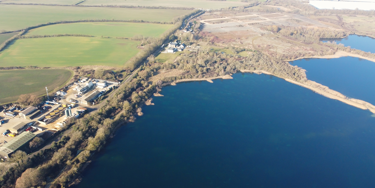
At a UK airport, the in-situ approach delivered a projected cost saving of £2.45 million over fifteen years compared with conventional pump-and-treat. Total projected costs were £1.57 million for in-situ treatment versus £4.02 million for pump-and-treat, representing a 61% reduction in cost.
These differences are not primarily driven by the technology itself, but when the decision is made.
In-situ treatment is effective, relatively low-footprint, and avoids the need to continuously extract, treat and manage large volumes of contaminated water. But it depends on a critical condition: the plume must still be containable. The treatment zone must still be manageable in scale.
Once a PFAS plume has migrated extensively - spreading across a larger area, interacting with complex geology, reaching new receptors - in-situ approaches are typically no longer viable. The plume is too large, the variability too complex, the extent too uncertain. The operator is left with conventional pump-and-treat as the only realistic option: extract contaminated groundwater, treat it above ground, manage the resulting waste streams, and repeat.
Five ways delay compounds the cost
The technology gap is the most quantifiable consequence of delay, but it is not the only one. PFAS financial exposure compounds through five interconnected mechanisms, each of which adds to the liability of the operator who waits.
1. Plume migration raises the remediation baseline
Every year without containment is a year of lateral and vertical plume growth, expanding the treatment zone, reaching new geology, and increasing the number of affected receptors.
The cost of characterising and remediating a 10-hectare plume is not ten times the cost of a 1-hectare plume - it is materially more, because of the complexity that scale introduces.
2. Tightening regulatory standards raise the remediation target
The UK currently has no statutory drinking water PFAS limits, but they are coming - the February 2026 PFAS Plan commits to consulting on them.
When statutory limits arrive, they define the cleanup standard. An operator who has already characterised their contamination can design their remediation against anticipated standards. An operator who waits designs against standards set by others, under external pressure.
3. Third-party claims expand as affected communities self-identify
The pattern established in US PFAS litigation is instructive: contamination becomes known; affected communities are identified; claimant law firms build registers; legal actions are filed. The time between initial identification of contamination and first claim filing has shortened dramatically as the PFAS legal template has matured. In the UK, that template is now being actively applied.
4. Inaction impacts insurance access and premiums
Environmental liability insurers are building PFAS underwriting positions that distinguish sharply between operators with documented management programmes and those without.
Operators who cannot demonstrate active, evidence-based PFAS risk controls face total exclusions, sub-limits or restrictive endorsements. The market is moving toward further restriction, not more lenient terms.
5. Asset values erode as the public sites map approaches
The Environment Agency's interactive PFAS sites map will be publicly accessible by end of 2027. For operators on it, the moment of publication is the moment their lender, insurer and prospective transaction counterparty all discover the exposure simultaneously. The operator who has a documented programme in place before publication is in a materially better position than the one who discovers the problem at the same time as everyone else.

The proactive cost is real, but bounded
None of this is an argument that proactive PFAS management is free. Site investigation has a cost. Treatment systems require capital investment. Monitoring is an ongoing programme commitment.
The decisive difference is control. The operator who acts early sets the scope, pace and specification of their programme. They choose the timing. They access competitive procurement conditions. They design their treatment approach around technologies that are advancing rapidly and which, in the right site conditions, can deliver the kind of lifecycle cost savings that peer-reviewed research now documents.
The operator who waits loses that control. Their scope is set by regulators or litigants. Their timing is set by enforcement notices or transaction pressure. Their treatment approach is constrained by the condition of a plume that has had years or decades to migrate. The cost is not just higher in absolute terms. It is higher because every option that would have made it lower is no longer on the table.
The fundamental equation
Proactive PFAS management costs are real, bounded and declining as technology matures. The costs of inaction are unbounded, accelerating and uncontrollable once set in motion. The financial case for acting now, on your own terms, is not marginal - it is decisive.



Environmental compliance today, creating a sustainable tomorrow
Helping you reduce risk to the environment and your operation by managing assets compliantly while achieving commercial, ESG, and net-zero goals.
Contact our experts