

Setting the ‘gold standard’ in PFAS response and remediation after major transformer fire at national infrastructure substation
Published: 21 July 2026
In March 2025, a major transformer fire at a national infrastructure substation triggered a significant environmental and infrastructure emergency. The six-day fire service response required 12.5 million litres of water and 12,500 litres of aqueous film-forming foam (AFFF), generating widespread PFAS contamination across the stormwater network, soils, groundwater, and the adjacent river.
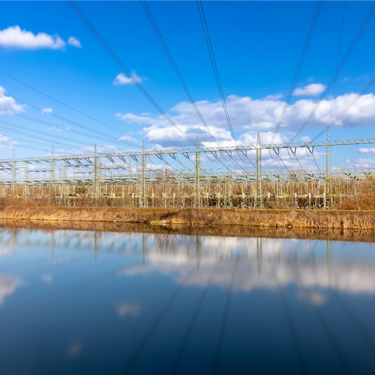
Located on a former landfill and beside a sensitive watercourse, the substation demanded a rapid, technically robust response. We were appointed to lead full environmental recovery – spanning emergency containment, complex remediation, verification, and regulatory sign off.
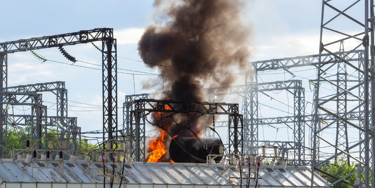
Framing the challenge
The scale of the firewater release created an unprecedented PFAS burden. Key challenges included:
Widespread contamination of 745m of cable troughs, 650m of storm drainage, hardstandings, and site infrastructure
Extremely high PFAS concentrations, including 4,772 µg/L (6:2 FTAB) and 11,185 µg/L (6:2 FTS)
Risk of PFAS mobilisation into the adjacent river, already a historically impacted waterbody
Physical damage to the drainage network requiring extensive repair
Need to rapidly contain PFAS migration while maintaining site safety and operational continuity
Our first priority was to prevent further off-site impact, followed by the development of a remediation strategy grounded in a detailed conceptual site model and advanced quantitative risk assessment.
Approach and implementation
We deployed a multi-stage remediation strategy integrating emergency containment, ex situ cleaning and repair, and novel in situ PFAS immobilisation technologies.
1. Incident response & early containment
Immediately after the fire:
The stormwater network was isolated to prevent uncontrolled PFAS migration
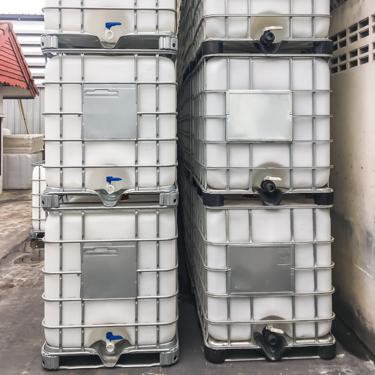
3 million litres of firewater were contained in circa 70 bulk storage tanks
194 tanker operations removed 4.64 million litres of contaminated firewater, stormwater, and solids
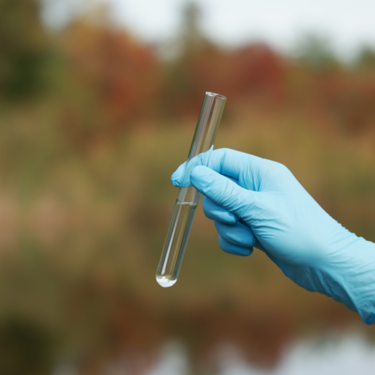
A river monitoring programme (SW0–SW5) demonstrated that the incident did not result in a sustained increase in long-term PFAS loading in the river, supported by upstream tracing to profile existing baseline PFAS sources.
This provided incredibly detailed and comprehensive PFAS river datasets and ensured early regulatory confidence.
2. Detailed conceptual site model & SSRTVs
We developed an advanced detailed quantitative risk assessment (Remedial Targets Methodology Level 4) to produce site-specific remedial target values (SSRTVs) for PFAS.
These incorporated:
River hydrological behaviour
Upstream PFAS contributions
Dilution modelling
Stormwater discharge scenarios
Laboratory detection limitations
SSRTVs formed the regulator-approved benchmark for remediation success.
3. Ex situ remediation & infrastructure repair
We undertook extensive physical remediation to remove PFAS mass and repair damaged infrastructure:
Jetting and cleaning of 650m drainage lines and 745m cable troughs
Removal of contaminated sediments
Structural repair, lining, and sealing of 33 pipe runs and 6 chambers
Off-site granular activated carbon (GAC) treatment of wash waters
These works addressed the bulk contamination and prepared the system for long-term stabilisation.

4. In situ PFAS immobilisation using colloidal activated carbon
The centrepiece of the recovery was the first of its-kind application of Regenesis’ colloidal activated carbon (CAC) across key drainage and infrastructure components.
This delivered:
Rapid PFAS sorption during a two week dwell period
A long-lasting reactive coating, across impacted infrastructure
In-situ immobilisation across infrastructure, bunds, and permeable zones
Effective in situ stabilisation without extended pump and treat operations
Over 9,070 litres of CAC concentrate were applied via flushing and spraying, followed by three full-network flushing and uplift cycles.
The result was an exceptional average 99.68% reduction in total PFAS mass, significantly surpassing regulatory expectations.
Outcomes and results
PFAS levels reduced below assessment criteria
Stormwater discharge safely reinstated
No sustained increase in PFAS loading to the adjacent river
Through strong engagement and collaboration, the recovery strategy received regulatory support, with the regulator praising the project as delivering the “gold standard” of PFAS response and remediation
Successful completion of a £7.5m remediation programme without environmental harm
Establishment of a new best-practice solution for PFAS incident response on operational high voltage infrastructure
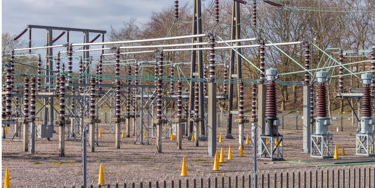
The substation PFAS recovery programme exemplifies comprehensive environmental leadership. Blending rigorous risk assessment, advanced technology, and operational excellence, it set a benchmark for meaningful PFAS emergency response and infrastructure recovery. With its regulator-validated outcomes and innovative in situ treatment strategy, this project stands as a model for complex infrastructure recovery and environmental protection.
More from our Knowledge Hub
 Insights
Turning environmental awareness into action: 8 defining conversations from ESS Expo 2026
 Insights
Environmental resilience will decide who wins the UK data centre race
 White paper
The Resilience Dividend: How Environmental Resilience is Becoming a Competitive Advantage for Data Centres
 Insights
Why provable data is becoming the water sector's next competitive advantage
Environmental compliance today, creating a sustainable tomorrow
Helping you reduce risk to the environment and your operation by managing assets compliantly while achieving commercial, ESG, and net-zero goals.
Contact our experts