

How should industrial sites prepare for El Niño?
Published: 6 November 2026
A warming Pacific Ocean may seem far removed from an industrial site in the UK, but global weather systems are connected. As El Niño strengthens, the likelihood of wetter, stormier conditions is increasing. The biggest risk is sustained pressure on drainage, containment, pumps, pipework, electrical systems, and emergency response arrangements.
If prolonged rainfall puts your site under pressure, where is it most likely to fail first?
What is El Niño?
El Niño is the warm phase of a naturally occurring climate cycle known as the El Niño-Southern Oscillation, or ENSO. During neutral conditions, trade winds generally blow from east to west across the tropical Pacific, pushing warm surface water towards the western Pacific and allowing colder, nutrient-rich water to rise closer to the west coast of South America.
During an El Niño event, those trade winds weaken or change. Warm water spreads back towards the central and eastern equatorial Pacific, increasing sea surface temperatures across a vast area. Because the tropical Pacific is a major source of heat and moisture, these changes can influence weather patterns around the world through atmospheric teleconnections.
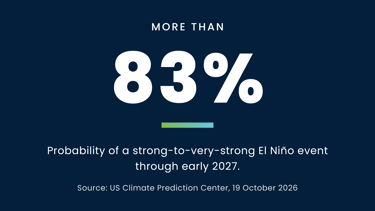
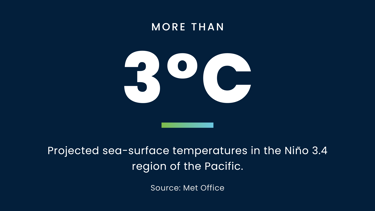
According to the US Climate Prediction Center (19 October 2026), El Niño is strengthening – with a strong-to-very-strong event likely through early 2027 at a probability of more than 83%. The Met Office has described current forecasts as unprecedented, with sea surface temperatures in the Niño 3.4 region projected to exceed 3°C above normal. Typical El Niño events produce warming of around 1–2°C, with 2°C already considered significant.
How can El Niño affect weather in the UK?
El Niño is one of several factors affecting winter conditions in the UK. The jet stream, Atlantic weather patterns, sea temperatures, and Arctic conditions also play important roles.
El Niño increases the likelihood of wetter, stormier conditions, particularly in late autumn and early winter – but it does not guarantee a wet winter. The Met Office says it shifts probabilities rather than determining individual weather events, while the Government Office for Science notes that UK impacts are less direct than in some other regions. With the current El Niño expected to be unusually strong, the precise UK effects remain uncertain, and that uncertainty is itself a good reason to prepare proportionately.

The role of the jet stream
The jet stream – a relatively narrow corridor of fast-moving air high in the atmosphere – is one of the most important influences on UK winter weather. It helps guide low-pressure systems and weather fronts across the North Atlantic, and changes in its latitude, shape and strength can make the difference between a settled period and a sequence of wet and windy systems.
El Niño can alter global atmospheric circulation and influence the wider patterns in which the North Atlantic jet stream operates. If the jet stream repeatedly directs Atlantic low-pressure systems towards the UK, the country can experience successive periods of rain and strong winds. Its exact position matters too, as a relatively small shift can change which parts of the UK receive the heaviest rainfall and which stay comparatively dry.
A seasonal outlook should never be interpreted as a detailed site forecast. It describes a change in the likelihood of broad conditions, not the exact timing, location or intensity of every storm.
Cumulative rainfall matters
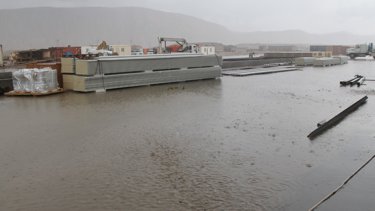
Industrial flood risk is often imagined as a dramatic river overtopping its banks or water suddenly entering a site, but many serious incidents develop more gradually. Repeated rainfall can saturate soils and fill drainage systems, ponds, culverts and watercourses, so the capacity left to absorb the next weather system becomes progressively smaller.
The condition of the ground before heavy rain arrives can be as significant as the rainfall itself. The Met Office has explained that when the ground is already saturated, even moderate additional rainfall can cause local flooding.
For an industrial site, cumulative rainfall can mean rising groundwater, reduced infiltration into surrounding land, and standing water across yards and access routes. Gullies and drains may fill or slow, water levels in attenuation systems rise, and pumps, separators and interceptors come under greater demand. Freeboard in bunds and containment systems is reduced, erosion can scour around assets and pipe supports, and access for staff, contractors and emergency vehicles may become restricted. A site may therefore become vulnerable before a formal flood warning is issued.
Understanding where those vulnerabilities lie relies on having visibility of drainage networks, containment assets, critical infrastructure, and the pathways through which water can move across a site.
Industrial sites face a different type of flood risk
Flooding at an industrial site is rarely just an issue of property damage. Water can interact with stored fuels, chemicals, process materials, waste, silts and residues. It can enter buildings containing production machinery, electrical controls or critical safety systems, and it can carry pollutants through drainage networks and beyond the site boundary.
The operational consequences can range from temporary or prolonged shutdown and damage to stock, plant and infrastructure, through to failure of critical electrical or pumping systems and contamination of stored products. Surface water, groundwater or soil may be polluted, and hazardous waste may need specialist treatment. Sites can also face restricted access, environmental reporting and investigation, clean-up and remediation costs, and reputational damage with regulators, clients and local communities.
As floodwater moves across an industrial site, it can pick up fuels, oils, chemicals, waste and other contaminants, creating pollution risks alongside the flooding itself. This complicates response and recovery because affected water may need testing, treatment, controlled discharge, or specialist disposal rather than simply being pumped away.
More than 1.2 million commercial and industrial properties in England are exposed to flood hazards. For many organisations, the operational, environmental and compliance consequences that follow a flood are a greater risk than the floodwater itself. Rather than a single intervention, managing them usually requires coordination across environmental risk assessment, drainage management, monitoring, engineering, emergency response, waste management, and recovery.
The hidden vulnerability beneath industrial sites
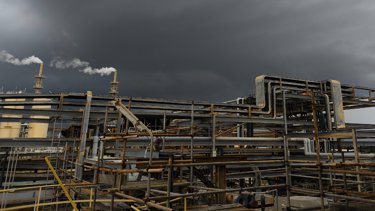
Many sites do not have a complete, current understanding of their underground drainage network. Plans may be out of date, previous alterations may not have been recorded, and surface and foul systems may have been connected incorrectly. Pipework may contain cracks, displaced joints, root ingress, silt deposits or partial collapses.
Under normal conditions, the network may appear to function adequately, but during sustained rainfall those hidden restrictions become critical. Water has to pass through gullies, channels, pipes, manholes, pumps, separators, attenuation features and outfalls, so the effective capacity of the whole system can be governed by its weakest or most restricted point.
That means a site with wide channels and large drains may still flood if a downstream culvert is restricted, an outfall is submerged, a non-return valve fails, a pump loses power, a separator is full of silt, or a section of underground pipework has deteriorated.
Separators and interceptors under pressure
Separators (sometimes referred to as interceptors) are installed in surface water drainage systems to prevent oil, fuel and silt from reaching the wider drainage network or environment. Their performance depends on having sufficient working capacity and regular inspection and maintenance.
During prolonged or intense rainfall, the volume and velocity of water entering the drainage system can increase significantly. If a separator is already carrying accumulated oil or silt, its effective capacity and treatment performance may be reduced, and an overwhelmed or poorly maintained separator can allow untreated pollutants to pass downstream. Surface run-off may also carry hydrocarbons, metals, debris and sediment from working areas into the drainage network.
Operators should check:
Oil and silt levels
Structural integrity
Inlet and outlet condition
Automatic closure devices
High-level alarms
Power and communications to telemetry
Maintenance records
Whether the separator is still suitable for the current site layout and activities.
A separator designed for an earlier use of the site may no longer be adequate after changes to yard areas, traffic movements, storage arrangements or drainage connections.
Bunds and secondary containment
Secondary containment is intended to retain pollutants if a tank, vessel or associated system fails. However, a bund partially filled with rainwater has less capacity available to contain a product loss, and cracks, failed joints, damaged coatings and unsealed penetrations can allow contaminated water to escape.
Winter preparation should include inspecting walls, floors, joints and penetrations, checking the condition and chemical compatibility of coatings, and confirming how much containment capacity is available. Valves, sumps and pumps should be examined, and sites should check how rainwater is assessed and removed, so that it is never discharged without knowing whether it is contaminated.
This is particularly important when prolonged rainfall follows a dry period, as temperature and moisture changes can expose defects in coatings, seals, concrete and ground conditions that were not obvious during normal operation.
Tanks, pipework and buried infrastructure
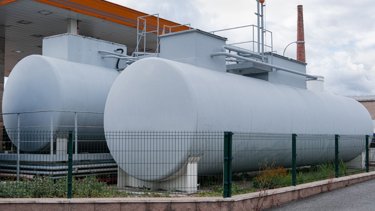
Floodwater can affect both above-ground and underground storage systems. Potential effects identified in our climate risk work include movement or flotation of underground tanks, loading and impact on above-ground tanks, overtopping of bunds, and contamination from water ingress. Buried systems can also suffer hydraulic overload, corrosion and damaged connections as the soil moves, while erosion can undermine foundations and pipe supports.
Alternating dry and wet periods can be especially challenging for sites on shrinkable or clay-rich soils. Dry conditions cause some soils to contract, and subsequent rehydration can cause swelling or movement, placing stress on tanks, pipes, valves and joints. Small movements may not produce an immediate visible failure, but they can create misalignment, seal damage or minor leakage that develops over time.
Depending on the site and asset, resilience measures may include anchoring vulnerable tanks, improving foundations, using flexible connections, protecting pipe supports, fitting water ingress alarms, and inspecting systems after significant weather events.
Pump stations and electrical equipment
Pump stations are often positioned at low points because that is where water naturally collects, which makes them inherently exposed to flooding. Water can get into the structure and damage control panels and switchgear, leading to power failure, loss of pumping capacity and, in turn, worse flooding elsewhere on the site.
Potential mitigation measures include raising electrical equipment above the relevant flood level, waterproofing cable entry points, installing flood doors or barriers, providing backup power, and monitoring critical conditions.
It is also worth looking beyond whether a pump passes a routine test. Operators should consider whether it will keep working when water levels are unusually high, the electrical supply is disrupted, the outfall is restricted, the inlet is blocked by debris, or it is no longer safe to access for maintenance.
Seven actions industrial operators should take now
Corporate climate risk statements are not a substitute for understanding individual sites. Start by assessing the potential sources of flooding, including rivers and watercourses, surface water run-off, groundwater, sewer surcharge, reservoirs, coastal flooding, and failures of on-site water infrastructure. Then consider the consequences for individual assets, access routes, utilities and operations.
The Environment Agency advises businesses in areas at risk of flooding to act before flooding occurs, check their long-term exposure, monitor shorter-term flood risk, and register for flood warnings where available.
Locate, map and inspect gullies, channels, manholes, culverts, surface and foul connections, separators, pumping stations, attenuation ponds, tanks and outfalls.
Where plans are incomplete or unreliable, drainage tracing and CCTV surveys can establish actual routes and identify defects. Rather than simply to produce a map, the aim is to understand where water will go, where restrictions exist, and where a failure could create an environmental or operational incident.
Clear leaves, debris, silt and vegetation from drainage features. Empty or service separators, catchpits, interceptors, wet wells and retention systems where required, and check pumps, high-level alarms, telemetry and automatic shut-off devices. This work should be completed before a run of wet weather reduces access or removes the safe opportunity to intervene.
Prioritise assets whose failure could stop operations or cause pollution. These typically include fuel and chemical tanks, bunds, pipework, valves, pumps, separators, electrical control equipment, waste storage areas and emergency generators.
Monitoring should translate changing conditions into an operational decision. Sites should define:
What is monitored
The threshold for escalation
Who receives an alarm
Who has authority to act
What action is required
What happens if the first-line response is unavailable.
Without a clear owner and response protocol, an alarm does little more than confirm that the site already has a problem.
A useful flood response plan should cover:
Roles and responsibilities
Monitoring weather and flood warnings
Escalation thresholds
Safe shutdown procedures
Isolation of drains and valves
Deployment of pumps, barriers and drain protection
Movement of vulnerable materials
Emergency access
Management of contaminated water
Regulator and stakeholder notification
Post-event recovery
For higher-risk sites, flood planning should also consider the possibility of a natural hazard triggering or escalating a technical accident. Industry guidance for COMAH and other major industrial sites describes these as natural hazard-triggered technological accidents – or, 'Natechs' – and emphasises the need to understand how flooding might initiate or worsen a major accident.
Plans should be exercised, so that teams know where response equipment is located and can deploy it safely in the conditions they will actually face.
When flooding occurs, a site may need more than pumping equipment. It may require rapid risk assessment, water sampling and contamination analysis, drain isolation, floodwater pumping, tankering, temporary storage, and on-site treatment. Beyond that, there may be hazardous waste to manage, environmental monitoring and asset inspections to carry out, cleaning, disinfection and remediation to complete, and evidence needed that the site is safe to return to operation.
Sites that have already worked out how these activities will be coordinated are usually better placed to reduce downtime, limit environmental impacts, and recover more quickly after an incident.
Building resilience through layers of protection
No single intervention can remove every flood risk. A cleared drain cannot compensate for an undersized outfall; a flood barrier cannot protect a site if water enters through a cable duct or sewer connection; and an emergency response contract cannot prevent disruption if critical electrical equipment is already under water.
Effective resilience therefore needs several layers:
Insight: Understand the sources, pathways, assets and operational consequences of flooding.
Prevention: Maintain drainage, containment and critical infrastructure to reduce avoidable failures.
Monitoring: Detect rising risk through rainfall, flow, level and asset condition information.
Protection: Introduce appropriate engineered, operational or nature-based measures.
Preparedness: Establish practical plans, trained people, equipment, and response arrangements.
Response: Mobilise safely and quickly to protect people, the environment and operations.
Recovery and adaptation: Restore the site, learn from the incident, and address underlying vulnerabilities.
Individual safeguards may have limitations, but several coordinated layers provide stronger overall protection.
El Niño is only part of the story
El Niño is increasing the risk, but site readiness will determine the outcome. Wetter and stormier conditions can expose weaknesses in drainage systems, containment assets, pumps and critical infrastructure that are already under pressure.
Nobody can control the weather, but operators can control asset condition, maintenance, monitoring and emergency preparedness. The organisations best placed to withstand severe weather are those that treat flood resilience as an ongoing operational discipline throughout the year.
Is your site prepared for a wetter, more unsettled winter?
Speak to us about a winter readiness review covering flood exposure, drainage networks, containment systems, critical infrastructure, monitoring arrangements, and emergency response preparedness. Our teams support organisations across the full resilience lifecycle, from assessment and monitoring through to drainage, engineering, pollution response, waste management, and recovery.
More from our Knowledge Hub



Here to solve your biggest challenges and grow sustainable value
Our expert consultants are available to broaden your thinking, lead transformation, and help you achieve successful outcomes.
Contact our experts