

Building water resilience: How UK businesses can respond to drought risk
Published: 17 June 2026
For decades, the UK has been viewed as a water-rich nation. Yet that perception is increasingly outdated. Extended dry spells, record-breaking temperatures, and mounting pressure on water resources are exposing a growing reality: drought risk in the UK is rising.
The scale of the challenge is significant. The Environment Agency warns that England could face a shortfall of 5 billion litres of water per day by 2055 - equivalent to around one-third of current public supply. At the same time, demand from industry, agriculture, and emerging technologies is expected to increase further.
For businesses, drought is an operational, financial, and regulatory risk that demands attention.
A changing climate, a changing risk profile
The UK is warming at a rate of approximately 0.25°C per decade, and the last decade was 1.24°C warmer than the historical average. Meanwhile, future projections suggest that summer rainfall could decrease by up to 60% by the 2060s, particularly in southern England.
Paradoxically, winters are becoming wetter - around 10% wetter than long-term averages - increasing flood risk even as summer water scarcity intensifies.
This shifting pattern is already visible. 2025 was the warmest and sunniest year on record, with persistent high-pressure systems driving extended dry periods and the driest spring since 1974, contributing to widespread drought conditions. These extremes are no longer anomalies; they are becoming a defining feature of the UK climate.
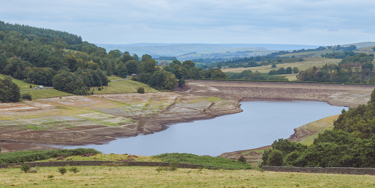
What rising drought risk means for businesses
This shift goes beyond water scarcity alone; it creates cascading risks for operations, supply chains, and business reputation.
1. Operational disruption
Water availability can directly impact production. Businesses reliant on abstraction or high water usage may face reduced supply, declining water quality, or restrictions during dry periods.
This risk is heightened by the regulatory environment: it is illegal to abstract more than 20 cubic metres of water per day without a licence, and access to new licences is increasingly constrained in water-stressed catchments.
2. Regulatory and compliance pressure
Water use is tightly regulated under frameworks such as the Water Resources Act 1991, with ongoing reforms to strengthen environmental protections and improve water efficiency.
In some regions, water bodies are already under severe pressure with around one in five surface waters in England and Wales over-abstracted. This is driving stricter controls, greater scrutiny, and increasing expectations on businesses to demonstrate responsible water stewardship.

3. Supply chain vulnerability
Drought risk does not stop at site boundaries. Suppliers operating in water-stressed regions may face disruption, driving delays, increased costs, or reduced availability of key inputs.
This can have significant economic implications. Water scarcity has already begun to constrain development in some regions and could cost the UK economy up to £25 billion in the near term.
4. Environmental liability
Lower river flows and reduced dilution capacity can amplify the impact of pollution incidents.
Drought is formally recognised as a national risk in the UK, and regulators have the power to impose controls such as abstraction restrictions, drought permits, and drought orders to protect water resources and the environment.
For businesses, this raises the stakes for pollution prevention, infrastructure management, and incident response.
Moving from risk awareness to action
The good news is that proactive businesses can build resilience and turn drought risk into an opportunity for smarter, more sustainable operations. Key strategies include:
1. Understanding your water risk exposure
You cannot manage what you don’t measure. Businesses need a clear picture of how water flows through their operations, where dependencies exist, and where vulnerabilities lie.
Water risk assessments and environmental compliance audits can help identify exposure across sites and supply chains, enabling businesses to move from reactive to risk-informed planning.
2. Improving water efficiency and reducing demand
Reducing consumption is one of the fastest ways to improve resilience. This can involve process optimisation, recycling systems, leakage reduction, and behaviour change.
This aligns with national priorities as regulators and water companies are targeting significant reductions in demand and leakage as part of long-term water resource planning.
3. Protecting water quality and preventing pollution
During drought conditions, even minor pollution incidents can have amplified environmental impacts, making robust prevention measures and rapid response capabilities essential.
A combination of proactive maintenance, effective drainage management, and well-planned incident response can help businesses minimise risks, prevent issues before they arise, and respond quickly when they do; providing critical reassurance in high-risk conditions.
4. Enhancing infrastructure resilience
Ageing assets, including drainage systems and storage tanks, can become weak points during periods of water stress. Ensuring infrastructure is fit for purpose is essential.
Regular inspection, maintenance, and targeted upgrades of critical environmental infrastructure can help organisations improve reliability and performance, ensuring systems continue to operate effectively even under extreme conditions.
5. Developing drought and incident response plans
Preparedness is key. While water companies are legally required to produce drought plans, there is a growing expectation that all major water users build resilience into their operations.
Combining strategic planning with practical, hands-on support can help organisations develop and implement robust emergency and resilience plans, ensuring they are ready to respond effectively when it matters most.
Turning risk into resilience
Drought risk in the UK is a growing and tangible challenge. Forward-thinking organisations are recognising that water resilience is not just an environmental responsibility but a business imperative.
By understanding risks, investing in efficiency, safeguarding infrastructure, and preparing for disruption, businesses can protect their operations and strengthen their long-term sustainability.
More from our Knowledge Hub
 Insights
Turning environmental awareness into action: 8 defining conversations from ESS Expo 2026
 Insights
Environmental resilience will decide who wins the UK data centre race
 White paper
The Resilience Dividend: How Environmental Resilience is Becoming a Competitive Advantage for Data Centres
 Insights
Why provable data is becoming the water sector's next competitive advantage
Environmental compliance today, creating a sustainable tomorrow
Helping you reduce risk to the environment and your operation by managing assets compliantly while achieving commercial, ESG, and net-zero goals.
Contact our experts