

From insight to impact: Delivering a solution to pollution at WWT Wastewater 2026
Published: 3 February 2026
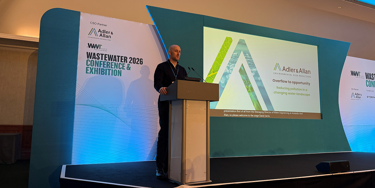
At WWT Wastewater 2026, one message came through clearly: reducing pollution from wastewater systems is not a new challenge, but the way we address it must fundamentally change.
With tightening legislation – including Section 82 requirements for water quality monitoring – water companies are now expected to understand their networks in near real time, anticipate risk, and demonstrate tangible environmental improvement. We see this moment not simply as a regulatory hurdle, but as a powerful opportunity for innovation, collaboration, and long-term system transformation.
Regulation as a catalyst for smarter networks
The move towards continuous water quality and asset monitoring requires utilities to deploy scalable, robust solutions across complex wastewater networks. Rather than viewing this as a compliance exercise alone, we believe it can accelerate the shift towards intelligent, optimised networks that work harder with the assets already in the ground.
Real-time monitoring, predictive analytics, and integrated data platforms are enabling water companies to move from reactive response to proactive control, targeting interventions before pollution events occur and improving transparency for customers and regulators alike.
Back to basics: Optimisation before build
A consistent theme throughout the event was the importance of optimisation before build.
Before reaching for capital-intensive solutions, there is significant untapped value in restoring and unlocking the true hydraulic capacity of existing networks. Proven, practical interventions – such as cyclical and targeted sewer cleaning, syphon rehabilitation, condition‑based maintenance, and improved pump station control and automation – have repeatedly demonstrated their ability to materially reduce CSO spills and, in some cases, eliminate the need for major capital schemes altogether.
This is not about doing less, it is about doing the right things first. Optimisation delivers better value for money, avoids unnecessary cost to customers, and creates breathing space to design more sustainable long-term solutions.
A catchment-wide solution to pollution
We call this approach, 'solution to pollution' – a holistic, catchment-wide strategy that moves beyond silos and short-term fixes.
True pollution reduction cannot be solved at a single asset or point in the network. It requires action across the entire system, from source to watercourse, including:
- Source control and misconnection management
- Infiltration and inflow reduction
- Rainfall forecasting and stormwater management
- Network modelling, optimisation, and real-time control
- Treatment performance and continuous water quality monitoring
Crucially, this approach integrates consultancy, modelling, data analysis, and on-the-ground remediation, bridging the gap between strategy and delivery.
Learning from the past, applying it to the future
This challenge is not unprecedented. The water industry has already demonstrated its ability to tackle systemic issues at scale, leakage being the most notable example. Through sustained investment, innovation, and collaboration, leakage performance has been transformed over time.
There is no reason storm overflows cannot follow the same trajectory. However, success depends on three critical enablers.
The three enablers of change

Investment
Significant commitments have been made through the price review process. The priority now is ensuring this investment flows efficiently into programmes, frameworks, and the supply chain, converting funding into outcomes.

Innovation
If we continue to do what we have always done, we will continue to get what we have always got. New challenges demand new thinking, from intelligent monitoring and control to adaptive, nature-based and hybrid solutions that deliver benefits over time.

Collaboration
No single organisation can solve this alone. Water companies, regulators, local authorities, and the supply chain must work together, sharing data, risk and learning to deliver solutions that are sustainable not just for AMP8, but for future generations.
Moving from compliance to confidence
The discussion at WWT Wastewater 2026 made one thing clear: the industry is moving away from a reactive stance of “we can’t control the weather” towards a more confident, informed and accountable approach to wastewater management.
By combining optimisation, intelligence and catchment-wide thinking, water companies can not only meet regulatory expectations but also rebuild public trust and deliver lasting environmental improvement.
We believe solution to pollution provides the framework to make that shift, turning insight into impact, and ambition into action.
More from our Knowledge Hub
 Insights
Turning environmental awareness into action: 8 defining conversations from ESS Expo 2026
 Insights
Environmental resilience will decide who wins the UK data centre race
 White paper
The Resilience Dividend: How Environmental Resilience is Becoming a Competitive Advantage for Data Centres
 Insights
Why provable data is becoming the water sector's next competitive advantage
Environmental compliance today, creating a sustainable tomorrow
Helping you reduce risk to the environment and your operation by managing assets compliantly while achieving commercial, ESG, and net-zero goals.
Contact our experts