

Managing legacy PFAS contamination at a major UK airport
Published: 15 July 2026
In response to elevated PFAS concentrations identified during regulatory monitoring, a major UK airport required a comprehensive assessment and remediation of its fire training area drainage infrastructure.
We delivered a structured, multi-phase programme combining investigation, remediation and asset renewal. This approach significantly reduced PFAS contamination, improved drainage performance, and strengthened regulatory compliance while maintaining operational requirements within a high-risk environment.
Framing the challenge
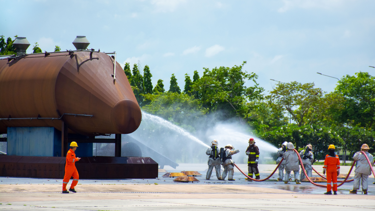
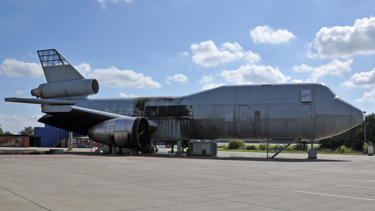
Routine monitoring undertaken to meet the requirements of a Regulation 61 Notice identified elevated PFAS concentrations within two lagoons and in groundwater at the airport's fire training area.
The findings indicated that contamination was either ongoing or being sustained by legacy sources within lagoon sediments and lining materials. This created environmental risk and regulatory pressure to demonstrate effective intervention.
Key challenges included:
Strict regulatory timelines to demonstrate measurable improvement
Requirement to minimise disruption to the operational fire training facility
Complex delivery within a live, high-risk environment
Adverse weather conditions and periods of prolonged rainfall
Uncertainty around contaminant volumes within lagoons and drainage systems
Identification of compliant disposal and treatment routes for contaminated materials
The combination of regulatory scrutiny, operational constraints, and legacy contamination required a robust and defensible remediation strategy.
Approach and implementation
We implemented a structured, multi-phase programme, integrating site investigation, drainage remediation, and civil engineering works to address contamination sources and infrastructure deficiencies.
Phase 1 – Site Investigation and Option Development
Initial works focused on detailed assessment to inform the remediation strategy, including:
Characterisation of PFAS contamination in water and sediments.
Measurement of lagoon depths and sediment profiles.
Topographic and utility surveys to identify potential contaminant pathways.
This data enabled the development of a targeted, cost-effective remediation methodology.

Phase 2: Contaminant removal and infrastructure assessment
Remediation works were undertaken to remove contamination and assess asset condition, including:
Removal of 627.9 tonnes of PFAS-contaminated water, sludge, and sediments
Transport and disposal at appropriately licensed facilities
Inspection of lagoons, identifying significant liner defects below water level
Assessment of oil separators, identifying one requiring replacement and another requiring repair
Phase 3: Drainage remediation and asset renewal
To address long-term risks and improve system performance, infrastructure upgrades were delivered, including:
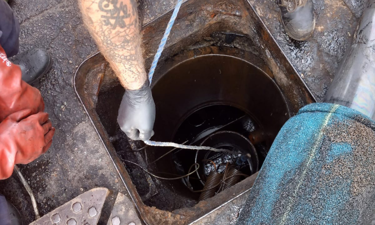
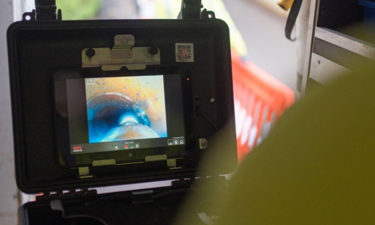
CCTV inspection of the drainage network, identifying 52 structural defects
Repair of 36 defects using nonintrusive patch lining techniques
Full replacement of lagoon liners with certified PFAS-free geotextile and HDPE geomembrane
Quality-assured installation supported by manufacturer warranties
These works reduced contaminant pathways and significantly improved asset integrity.
Outcomes and results
The integrated remediation and infrastructure improvement programme delivered measurable environmental and operational benefits:
Significant reduction in PFAS concentrations, achieving improvements of 60–80% compared to baseline levels
Enhanced environmental protection, reducing risk to groundwater and surrounding environments
Improved drainage performance through targeted repair of structural defects
Extended asset lifespan through replacement of lagoon lining systems
Improved regulatory compliance and confidence from stakeholders
Greater understanding of site infrastructure, supporting future maintenance and risk management
Works were completed while maintaining the airport's operational requirements, ensuring continuity of critical training functions.
Through a coordinted, multidisciplinary approach, we successfully addressed the immediate and legacy impacts of PFAS contamination within a complex operational environment.
By combining detailed investigation, targeted remediation, and infrastructure renewal, the project delivered substantial environmental risk reduction, improved asset resilience, and strengthened compliance with regulatory obligations – providing a sustainable foundation for long-term site management.
More from our Knowledge Hub
 Insights
What does a Regulation 61 notice mean for your airport operations?
 Insights
Turning environmental awareness into action: 8 defining conversations from ESS Expo 2026
 Insights
Environmental resilience will decide who wins the UK data centre race
 White paper
The Resilience Dividend: How Environmental Resilience is Becoming a Competitive Advantage for Data Centres
Environmental compliance today, creating a sustainable tomorrow
Helping you reduce risk to the environment and your operation by managing assets compliantly while achieving commercial, ESG, and net-zero goals.
Contact our experts