

Ensuring seasonal resilience for your sites – what to prioritise now
Published: 12 January 2026
At this time of year, industrial sites face heightened environmental risks ranging from flooding to asset failures.
Intense rainfall, freezing temperatures, and shorter daylight hours can amplify the risks that industrial sites already manage – especially around drainage, environmental compliance, and asset integrity:
- A single blocked culvert can trigger localised flooding
- A minor crack in a pipe can become a major spill
- A neglected tank can fail under thermal stress
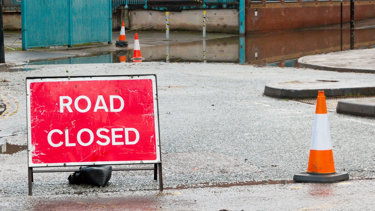
The costs involved can be operational, reputational and regulatory.
Taking a proactive approach to drainage, compliance audits, and integrity testing can reduce incidents and avoid costly operational downtime.
In this article, we explore three critical seasonal considerations: flooding and storm damage, environmental compliance under strain, and asset integrity in cold conditions – and the actions you can take now to reduce risk and protect your site.
Flood risk and drainage: prepare before the next storm
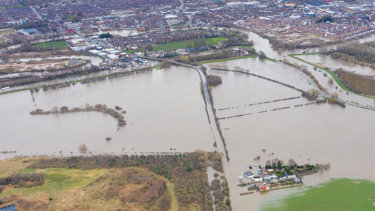
Winter rainfall, snowmelt, and storm surges can increase surface water loading on sites. In these circumstances, ageing or silted drainage may struggle to cope with additional volume which can lead to ponding, water ingress into critical areas, and overtopping of containment.
Common site weak points to consider include:
- Blocked or undersized drains, culverts, gullies, and interceptor sumps
- Insufficient capacity in containment areas during heavy rainfall
- Poorly maintained outfalls and valves that could lead to backflow
- Inaccurate or incomplete site drainage/flood maps and untested assumptions about flow paths
Actions you can take
- Commission a drainage survey and cleanse: Jetting, CCTV inspection and interceptor servicing can identify defects and restore capacity.
- Update your flood risk assessments: Factor in recent rainfall patterns, altered site layouts, and nearby catchment changes.
- Create temporary capacity: Portable pumps, flood barriers, and pre-positioned bunding reduce response time.
- Map emergency access routes: Ensure critical plant and response equipment remain reachable during peak flow events.
Environmental compliance: cold weather raises the stakes
Freezing temperatures can cause brittle fractures, seal failures, and pinhole leaks that can exacerbate minor defects and cause spills. Adverse weather can also impact site access and slow response in the event of an incident.
Key risks to manage include:
- Tank and pipework integrity – thermal cycling loosens seals and stresses welds
- Product contamination – checking for water ingress and microbial growth in storage systems
- Permit breaches – overflows from drainage systems, uncontained releases, improper dewatering
- Access constraints – ice and snow can delay clean-up, increasing environmental impact and regulatory exposure
Actions you can take
- Run a pollution prevention audit: Check your storage arrangements, transfer operations, bunding capacity, and emergency response protocols.
- Test and maintain tanks: Integrity testing, thickness checks, and valve/seal inspections, with preventive maintenance scheduled.
- Check spill kits and training: Confirm availability, suitability for cold conditions, and your team’s confidence in using them.
- Verify compliance documentation: Ensure your permits, procedures, and logs are current and weather-aware.
Asset integrity: winter-proofing critical infrastructure
Cold weather accelerates deterioration and can expose hidden defects. Unplanned failures can lead to safety incidents, costly downtime, and compliance breaches.
Assets to prioritise and specifics to check include:
- Tanks and bunds – ageing coatings, corrosion, and thermal stress
- Pipelines and valves – brittle fractures, joint/seal failures, and expansion/contraction misalignment
- Drainage and interceptors – silt loading, hydrocarbon capture capacity, and mechanical defects
- Electrical and critical plant – moisture ingress and reduced reliability during cold starts
Actions you can take
- Integrity and non-destructive testing: Prioritise high-consequence assets, document findings, and schedule remediation.
- Preventive maintenance windows: Bring forward essential works before further cold snaps.
- Condition monitoring: Temperature, vibration, and fluid analytics to detect early signs of failure.
- Resilience upgrades: Consider implementing insulation, protective coatings, and bund repairs.
Building a combined winter resilience plan
The key to preparedness is an actionable plan. Here are five steps you can take to build yours:
- Start with a winter resilience survey – arrange a rapid assessment of drainage, high-risk assets, and compliance gaps.
- Prioritise by consequence – rank your assets and systems by environmental, safety, and operational impact.
- Identify and schedule quick wins – e.g. drainage cleanse, spill kit readiness, documentation updates.
- Lock in 24/7 capability - confirm rapid response contacts, pre-authorisations, and access routes so your site is fully prepared in the event of an incident.
- Track and improve - use a simple dashboard to capture details of incidents, near misses, asset health, and flood readiness and review this monthly.
Act early, reduce risk, protect your reputation
Extreme weather doesn’t respect assumptions. Proactive steps taken now – cleaning drains, testing tanks, ensuring audit compliance – prevent emergencies later.
With the right partner and a practical plan, you can keep your people safe, your operations efficient, and regulators confident.
Ready to reduce risk? Talk to us about site resilience today.
More from our Knowledge Hub
 Insights
Turning environmental awareness into action: 8 defining conversations from ESS Expo 2026
 Insights
Environmental resilience will decide who wins the UK data centre race
 White paper
The Resilience Dividend: How Environmental Resilience is Becoming a Competitive Advantage for Data Centres
 Insights
Why provable data is becoming the water sector's next competitive advantage
Environmental compliance today, creating a sustainable tomorrow
Helping you reduce risk to the environment and your operation by managing assets compliantly while achieving commercial, ESG, and net-zero goals.
Contact our experts