

Environmental resilience will decide who wins the UK data centre race
Published: 4 September 2026
The UK is building digital infrastructure faster than the railway age. But power demands, water supplies and regulation requirements are all tightening. The operators who treat environmental resilience as something to evidence, maintain and audit will get through planning faster, find better insurance, and fail less often.
In March 2025, moisture inside a 57‐year‐old transformer bushing at the North Hyde substation started a fire. It shut Heathrow Airport, disrupted 200,000 passengers, and cut power to 16,000 homes. The backup supply had been wired into the same circuit as the failure. When the National Energy System Operator published its review, the lesson went far beyond one substation. Catastrophic failures are usually maintenance failures with a long paper trail, and single points of failure hide in the assets nobody checks.
This is a warning for the UK's data centre sector. The industry is trying to build a new class of Critical National Infrastructure at private‐sector speed on an electrical grid, water system and planning regime that are all under visible strain.
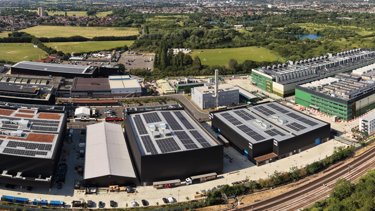
A build‐out that has outgrown property economics
The numbers describing the UK data centre market now read like national infrastructure statistics.
IT load capacity is forecast to more than triple by 2031
Over 200 planning applications went in during 2025 alone
Reforms aim to unlock up to £100 billion of investment
Electricity demand is projected to rise from around 7.6 TWh today to 33 TWh by 2035
Every megawatt of that ambition draws on a grid connection queue that already exceeds 70 GW, of which only around 13 GW of firm demand can realistically connect before 2030. Ofgem's TMO4+ reform has replaced 'first come, first served' with 'first ready, first needed, first connected'. Schemes that can't prove they're ready – including environmentally – now lose their place in the queue to schemes that can.
Deliverability has replaced demand as the source of competitive advantage. The market no longer asks whether capacity is wanted, only whether a scheme can prove it has secured power, water, consent, and resilient operations.
The risk is physical, not abstract
Environmental risk in this sector is not a distant climate scenario. It is a set of specific physical and regulatory exposures that turn directly into downtime, delay and cost.
Power remains the leading cause of serious outages, and the failures behind that usually related to uninterruptible power supply systems, transfer switches, and generators. Behind a striking share of generator failures sits stored fuel that is quietly growing water and microbial contamination through months of standby, until the generator is finally called on and cannot start.
Water is following a similar trajectory, about five years behind. Research published in April 2026 found that 84% of proposed UK data centres sit in water‐stressed areas, while England faces a forecast public water supply deficit of five billion litres a day by 2055. There is no mandatory water disclosure regime yet, but a live parliamentary inquiry is looking at exactly this. That gap won't stay open forever.
Meanwhile, the compliance bar keeps rising: generator permitting under the Medium Combustion Plant Directive, decarbonisation readiness requirements from February 2026, mandatory biodiversity net gain, and a UK REACH restriction on PFAS in firefighting foams expected in 2027. Sites that have never mapped where their firewater goes are carrying an unquantified liability on land they may one day need to sell, refinance or redevelop.
The costs are well documented. In the Uptime Institute's 2026 analysis, 57% of operators put their most recent major outage above £100,000 – and one in five above £1 million – before contractual penalties, customer attrition and reputational damage.
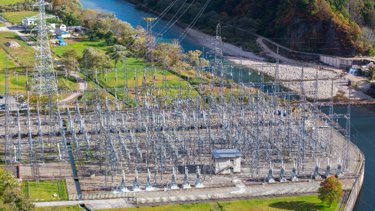
Every exposure has a payoff
Treating environmental obligations as pure cost is, on the evidence, the commercially incorrect. Every risk has a return earned by the operators who manage it visibly well. The gap between those two positions the resilience dividend.
Schemes that arrive at planning with flood risk resolved, biodiversity net gain designed in, and a clear water strategy turn policy tailwind into energisation dates. The same competence unlocks sites others can't touch. Well‐connected brownfield land is often discounted because developers fear its contamination history, but thorough investigation and remediation turn that discount into margin.
Uptime is increasingly something you buy through good management rather than luck. Outage frequency is falling year on year at well‐run sites, which proves that resilience responds to investment such as fuel testing that keeps generators functional, tank and pipework integrity checks, drainage telemetry that keeps water out of critical spaces, and rehearsed, contracted 24/7 incident response. This is not clever engineering, it is disciplined maintenance – often the difference between an incident and an outage.
Since data centres became Critical National Infrastructure in 2024, demonstrable resilience has become a currency of its own. Customers signing decade‐long capacity agreements, insurers underwriting risk, and lenders pricing returns all ask for evidence. Operators holding current audits, monitoring records and maintenance histories can answer in days; the dividend compounds through shorter sales cycles, better insurance terms and regulatory goodwill that shapes rules still being written.
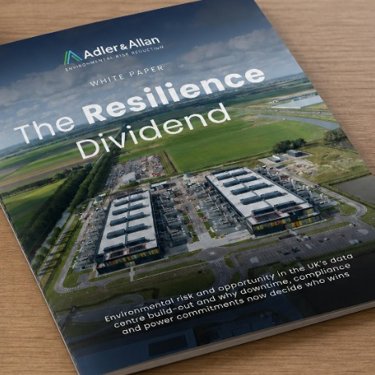
White paper
The Resilience Dividend: How Environmental Resilience is Becoming a Competitive Advantage for Data Centres
Explore the trends shaping the data centre sector, understand the emerging risks affecting growth, and learn how leading operators are improving resilience across their estates.
Collect the dividend
You collect the resilience dividend through management discipline, not capital spending. The framework we use with operators and facilities management partners runs through five stages:
Assess every site until there are no unknown assets
Evidence compliance so it's retrievable in days, not weeks
Maintain fuel, tanks, drainage and monitoring on planned programmes
Respond through contracted, rehearsed 24/7 arrangements
Improve by feeding telemetry and post‐incident learning back into investment plans
Most sites we assess for the first time have strong evidence for one or two of those stages, and almost nothing for the rest (typically drainage condition and firewater pathways). The gaps cluster exactly where outage post‐mortems and enforcement cases begin.
The UK will build the data centre capacity its economy demands. The question is who will build and operate it profitably, and who will spend the next decade paying for deferred physical discipline through outages, enforcement and stalled schemes?
The dividend is real and compounding, yet unclaimed for most sites in the country. The best time to collect it is before the next heatwave, the next storm, or the next start signal a generator fails to answer.
More from our Knowledge Hub
 Insights
Turning environmental awareness into action: 8 defining conversations from ESS Expo 2026
 Insights
Environmental resilience will decide who wins the UK data centre race
 White paper
The Resilience Dividend: How Environmental Resilience is Becoming a Competitive Advantage for Data Centres
 Insights
Why provable data is becoming the water sector's next competitive advantage
Here to solve your biggest challenges and grow sustainable value
Our expert consultants are available to broaden your thinking, lead transformation, and help you achieve successful outcomes.
Contact our experts