

How embedding flood resilience by design protects your sites, budgets, and operations
Published: 26 March 2026
As climate change accelerates and extreme weather becomes a defining feature of the UK’s risk landscape, organisations can no longer afford to treat flooding as an occasional operational disruption. The latest national assessment shows the number of properties in areas at risk of flooding is projected to rise to around 8 million by mid-century (around 1 in 4 properties) as climate impacts intensify.
Flooding is no longer a rare, seasonal event; it’s a growing operational risk that can disrupt business continuity, damage assets, increase insurance costs, and undermine compliance and reputation. The principles of flood resilience must now be embedded into the way you plan, design, operate and invest in your site. Done well, it protects people, assets, and operations every day – not just during extreme weather.
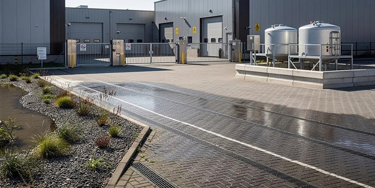
Why resilience should be your design philosophy
The scale of the risk is growing: surface water flooding alone now threatens 4.6 million properties, a 43% increase from the previous national assessment – driven by better modelling, but also by increasing rainfall intensity.
As UK flood risk increases, traditional protection alone cannot keep up. Designing for resilience from the outset enables organisations to avoid expensive corrective works, reduce downtime, protect critical infrastructure, strengthen insurer confidence, and reduce long-term OpEx and CapEx pressures.
Resilience shouldn’t be seen as a defensive strategy but as an enabler of business continuity, reliability and efficiency.
The principles of effective flood resilience
1. Understand your risk – today and tomorrow
Every site has a unique risk profile and, with climate change accelerating, yesterday’s data is no longer good enough. A resilient approach means assessing risk over the next 10–50 years and understanding the following:
- Surface water pathways and natural drainage
- How assets, operations and utilities connect
- How people access and move through your site
This approach provides a clear picture of vulnerabilities and opportunities.
2. Plan for disruption, not just damage
Traditional approaches focus on preventing water ingress, but true resilience prioritises business continuity, ensuring operations can continue, essential systems are protected, spaces can fail safely, and recovery can begin quickly.
Flood events currently lead to workers being unable to reach workplaces for an average of 10 days, costing UK businesses £290 million in lost output each year, underscoring the need to prioritise operational continuity as much as site protection.
3. Combine natural and engineered solutions
The most effective defence blends nature-based features such as wetlands and green infrastructure with engineered systems like barriers, pumps and drainage improvements. This hybrid approach delivers long-term performance while supporting sustainability, permitting and ESG goals.
Moving from reactive measures to proactive adaptation
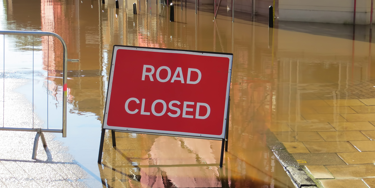
Historically, flooding has been dealt with reactively by deploying pumps, sandbags or temporary measures after the damage has already begun. Infrastructure upgrades then only come into play once a site has suffered a costly incident.
Understanding historical and projected flood risks at the outset helps ensure developments are located and configured intelligently. This includes understanding flood pathways, natural drainage and topography. Early decisions can significantly reduce the financial and operational burden later protective works can introduce.
Embedding resilience into site planning and lifecycle management
Flood resilience is most effective when considered from the very beginning of a site’s development and then continually reinforced throughout its operational life. This means thinking about resilience as a thread that runs through planning, design, construction, and long-term management; not just as a solution once problems appear.
1. Early-stage site planning
At the earliest planning stage, taking time to understand both historical and projected flood risks lays the foundation for an effective resilience strategy. This includes analysing how flood patterns are likely to evolve, understanding the site’s natural drainage characteristics, and recognising how water naturally moves across the landscape.
With this knowledge, you can position buildings and critical infrastructure in the most appropriate locations and make use of topography to help manage water rather than fight against it. Making these decisions at the outset avoids the financial and operational burden of retrofitting flood protection later.
2. Design and development
Resilience should be embedded into every technical decision during design – from selecting flood-resistant materials to raising equipment, isolating utilities, and integrating adaptive drainage and blue-green infrastructure. The goal is a site that manages water safely and recovers rapidly.
3. Operation and maintenance
Flood resilience needs to be actively maintained throughout a site’s lifecycle. This includes routine inspections of drainage systems, barriers and pumps, ensuring they remain effective as conditions change. As new climate projections emerge, risk assessments should be reviewed and updated to ensure sites remain prepared for future scenarios.
Staff also play a critical role, so training in preparedness and response procedures is essential. Monitoring technologies and sensors can also help by providing real-time insights into water levels and system performance.
Forward-looking standards that support resilience goals
The UK’s evolving regulatory and sustainability landscape already reflects the need for more resilient development. Here are three examples with direct relevance to flood-resilient design.
National Building Specification standards increasingly encourage early consideration of environmental risk, sustainable materials and climate-adapted design. This ensures resilience is embedded into the technical specification stage, not added as an afterthought.
Sustainable drainage systems are now a critical part of modern drainage design, helping developments work with water rather than against it. They reduce surface-water flood risk, improve water quality, enhance biodiversity, and lower demand on traditional drainage networks.
Though biodiversity net gain is primarily an ecological requirement, it also offers opportunities for flood resilience. Enhanced natural habitats such as wetlands, scrubland, ponds and tree cover often function as natural flood storage, infiltration zones and surface-water moderators. Together, these initiatives push the industry toward a more complete, future-ready approach to design and development.
Building a future-ready built environment
Climate change demands new ways of thinking, and embedding flood resilience into the design and management of assets is now essential.
By taking a proactive, integrated approach to flood resilience, organisations can strengthen compliance, reduce operational downtime and disruption, unlock economic value, and protect people, assets and the environment.

More from our Knowledge Hub
 Insights
What does a Regulation 61 notice mean for your airport operations?
 Insights
Turning environmental awareness into action: 8 defining conversations from ESS Expo 2026
 Insights
Environmental resilience will decide who wins the UK data centre race
 White paper
The Resilience Dividend: How Environmental Resilience is Becoming a Competitive Advantage for Data Centres
Environmental compliance today, creating a sustainable tomorrow
Helping you reduce risk to the environment and your operation by managing assets compliantly while achieving commercial, ESG, and net-zero goals.
Contact our experts