

Turning monitoring data into confident, cost-effective asset decisions
Published: 26 May 2026
When testing and inspection are delayed, risk accumulates, costs escalate, and organisations lose confidence in their understanding of asset condition. So, what becomes possible when monitoring, testing and expertise are used together to actively close that gap?
Rather than reacting to failure or chasing compliance, leading operators are building decision frameworks rooted in continuous visibility and evidence from the field. The result is not simply less downtime, but greater confidence in when to intervene, when to defer, and where to invest.
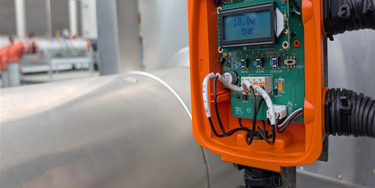
Building a living picture of asset health
Unplanned downtime continues to be a major UK cost driver with UK manufacturers losing around 3% of total working time (around 49 hours per site per year) due to machine failures, most of which are linked to deterioration that could be detected earlier with condition monitoring.
One of the core challenges is the reliance on fragmented or outdated data. Periodic inspections alone provide only momentary snapshots, often disconnected from how assets actually behave in service.
Continuous monitoring changes this dynamic. Modern technologies allow operators to observe gradual deterioration as it unfolds, rather than discovering it after the fact.
Examples include:
- Vibration and acoustic patterns that reveal wear, imbalance, or misalignment in rotating machinery
- Temperature, pressure, and load trends that indicate declining efficiency or abnormal operation
- Structural movement, strain and corrosion measured over time rather than inferred during shutdowns
- Electrical behaviour and insulation performance that signals degradation before failure
Used properly, this data informs inspection, ensuring testing effort is focused where it adds the most value.
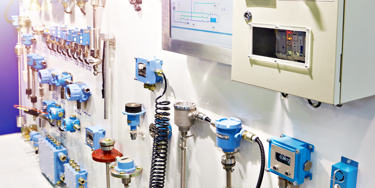
Turning data into insight, not false assurance
Poor quality or inconsistent testing can distort dashboards and create a false sense of control. Monitoring data poses the same risk when it is treated as an end in itself rather than as an input to informed decision making. This is reflected in practice, with more than 80% of manufacturers reporting difficulty accurately calculating downtime costs – not because technology is lacking, but because condition and maintenance data is fragmented and disconnected.
The differentiator is interpretation. When monitoring outputs are combined with targeted inspections, operational context, and engineering judgement, data gains meaning. Trends replace noise, signals are understood in context, and insight emerges that supports confident, evidence-based decisions rather than assumption-driven ones.
This integrated approach enables:
- Identification of underlying degradation mechanisms, not just symptoms
- Risk assessment based on observed behaviour and trend, not static thresholds
- Maintenance planning aligned to real condition rather than assumed asset life
- Interventions that slow deterioration instead of simply responding to failure
Organisations move from asking 'what alarm went off?' to “what is actually happening to this asset?”.
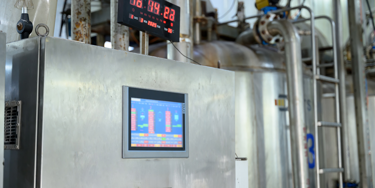
The shift from risk avoidance to value-driven decisions
The opportunity for site operators is the value of foresight. When monitoring, inspection and expertise operate as a single system, asset management shifts from emergency response to strategic control.
Operators are better able to:
- Reduce unplanned outages and emergency repair costs
- Target maintenance spend where it delivers measurable risk reduction
- Justify refurbishment or life extension over premature replacement
- Demonstrate compliance through evidence, not assumption
In this model, assets are no longer managed by intervals and averages, but by behaviour and consequence.
Confidence comes from evidence, not technology alone
Technology does not deliver outcomes on its own. The absence of reliable evidence leads to escalating risk, but the presence of high-quality, contextual insight enables confident, defensible decisions.
Across UK aviation, utilities, logistics and retail, the pattern is consistent: technology and monitoring are widely adopted, but confidence in asset decisions depends on the quality, interpretation and integration of the data behind them rather than the volume collected.
Assets rarely fail because they are old, but because deterioration goes unseen, misunderstood, or unchallenged. By combining continuous monitoring with disciplined testing and expert interpretation, organisations replace assumption-based maintenance with evidence-led stewardship.
Together, these two perspectives frame a clear choice: accept the growing maintenance deficit, or use insight to actively close it.
More from our Knowledge Hub
 Insights
Designing compliance from day one: Why early-stage planning matters more than ever
 Insights
Turning monitoring data into confident, cost-effective asset decisions
 Insights
The maintenance deficit: What delayed testing and inspection really cost
 Insights
Ageing assets: The hidden risk undermining industrial performance
Environmental compliance today, creating a sustainable tomorrow
Helping you reduce risk to the environment and your operation by managing assets compliantly while achieving commercial, ESG, and net-zero goals.
Contact our experts