

The maintenance deficit: What delayed testing and inspection really cost
Published: 5 May 2026
Every year, the number of ageing assets kept in operation increases, while maintenance budgets remain flat – or even shrink. The result is a widening maintenance deficit; a growing gap between what assets need to remain operational and perform reliably, and the actions organisations actually take to support them.
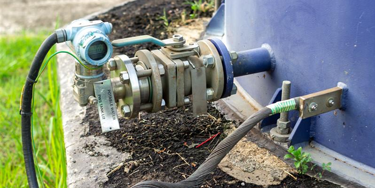
When maintenance falls behind, risks multiply
Whilst delaying testing or inspection may offer short-term cost savings, the cumulative risks are significant:
- Unplanned failures that disrupt operations and endanger personnel
- Escalating repair costs that are often far higher than proactive maintenance would have required
- Regulatory and compliance exposure, especially for safety-critical or environmentally sensitive assets
- Reduced operational efficiency as degraded assets consume more energy, produce lower output, or require frequent reactive fixes
Over time, as these risks develop into operational issues, organisations fall into a pattern of firefighting – responding to symptoms rather than addressing the underlying causes.
The result for site owners and operators is increased cost. Industry research consistently shows that reactive repairs cost 3–5 times more than planned preventive maintenance, largely due to secondary damage, emergency labour, and operational disruption.
Digital tools are only part of the solution
Many operators invest heavily in software platforms, dashboards, and sensor networks. While these technologies play an important role in managing asset health, they cannot compensate for inconsistent or low-quality testing. Without accurate inspection data, even the most advanced digital systems fail to provide reliable insight.
This gap is clearly visible in the UK. Predictive and condition-based maintenance remains far from embedded, with studies suggesting that only around 30-40% of manufacturers have deployed these approaches at all – and typically on a narrow subset of assets rather than across entire estates.
This is despite growing investment in sensors, data platforms, and automation, underscoring that technology uptake alone is not enough to drive effective maintenance outcomes.

Poor or infrequent testing does more than create blind spots; it fundamentally undermines an organisation’s understanding of asset condition. When inspections are delayed, rushed, or inconsistently executed, the information feeding maintenance decisions is fragmented and incomplete. Over time, asset data becomes unreliable and weakens the link between observed condition and planned intervention.
As a result, organisations begin to experience a range of compounding issues:
- Data gaps that hide emerging failures
- Misleading health indicators
- Incorrect prioritisation of maintenance spend
- False confidence in asset condition
These effects rarely appear immediately. Instead, they build quietly over time, creating the illusion that assets are under control until a failure exposes the weaknesses in the underlying data. At that point, digital tools become part of the problem rather than the solution, reinforcing poor decisions instead of challenging them.

“Industry research consistently shows that reactive repairs cost 3-5 times more than planned preventive maintenance, largely due to secondary damage, emergency labour, and operational disruption.”
Transforming compliance testing into strategic insight
Testing and inspection activities are often viewed as a compliance burden; tasks that are necessary, but not inherently valuable. However, with the right approach, they can become a powerful source of strategic intelligence.
High-quality inspections can reveal:
- Degradation trends that predict failures before they occur
- Root causes of deterioration, enabling targeted interventions
- Cost-saving opportunities, such as refurbishment over replacement
- Risk-based priorities to guide maintenance planning and capital allocation
This moves organisations away from reactive, emergency-driven maintenance and toward proactive, cost-effective asset stewardship.
Delayed testing isn’t just a technical issue, it materially increases legal, financial and reputational risk, particularly for safety-critical or regulated assets. In April 2025 alone, failures in basic safety management, inspections, and maintenance controls largely contributed to UK Health and Safety Executive (HSE) fines totalling almost £11 million.

Closing the maintenance deficit
The maintenance deficit rarely appears overnight. It develops gradually as inspection regimes are diluted and short-term pressures override long-term asset health. Its consequences, however, are sudden – failures are abrupt, expensive, and often entirely preventable.
Closing the maintenance deficit demands a combination of technology and accurate, real-world, consistent evidence from the field. With the right approach, testing and inspection can be a vital source of insight that enables earlier intervention, better targeted investment, and a decisive shift away from reactive maintenance.
More from our Knowledge Hub
 Insights
Designing compliance from day one: Why early-stage planning matters more than ever
 Insights
Turning monitoring data into confident, cost-effective asset decisions
 Insights
The maintenance deficit: What delayed testing and inspection really cost
 Insights
Ageing assets: The hidden risk undermining industrial performance
Environmental compliance today, creating a sustainable tomorrow
Helping you reduce risk to the environment and your operation by managing assets compliantly while achieving commercial, ESG, and net-zero goals.
Contact our experts