

Ageing assets: The hidden risk undermining industrial performance
Published: 16 April 2026
Across industrial sectors, ageing assets are rapidly becoming one of the most severe and costly operational threats. Most critical infrastructure currently in service was never designed to operate far beyond its original lifecycle. However, rising production demands, squeezed budgets, and resource constraints mean many organisations are running older assets harder, for longer, and without full, ongoing visibility of their true condition.
The National Audit Office estimates that maintenance backlogs across UK public sector infrastructure alone exceed £49 billion, with data gaps suggesting the true figure is likely significantly higher.
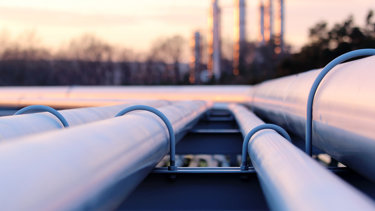
Outdated condition reports and false confidence
Many operators still rely on assessments that are either out of date, based on periodic inspections with long intervals, legacy testing methods, or engineering assumptions rather than real evidence.
A static condition report may look reassuring, but it often fails to reflect:
- Progressive degradation happening between inspection cycles
- Hidden defects developing under dynamic operating conditions
- Changes in environmental exposure, load profiles, or duty cycles
- New stresses created by modifications or operational adjustments
In high‑hazard UK sectors, the Health and Safety Executive (HSE) has found that around 60% of major accidents are linked to technical integrity failures, with ageing‑related degradation contributing to roughly half of those cases.
The reality is that the health of an ageing asset – a tank, a bund, a pipeline – can deteriorate significantly without any obvious external signs. What appears safe on paper may be approaching failure in practice.
Why leaders need a live view of asset health
The National Engineering Policy Centre (NEPC) has warned that most UK infrastructure assets that will be operating in 2050 have already been built – meaning performance, resilience and safety now depend far more on monitoring and maintenance than replacement.
Modern asset management requires more than scheduled tests and inspection tick boxes. Only real-time, evidence-based insight can help organisations understand how their assets are performing today, not two or five years ago.
This demands a shift toward:
- Advanced non-destructive testing (NDT) that can detect sub‑surface cracks, corrosion, fatigue and wear with far greater sensitivity.
- Condition monitoring to track vibration, temperature, load and other early indicators of stress or degradation.
- Predictive analytics and risk modelling grounded in accurate, high-quality data.
- Consistent, expert interpretation so that signals, anomalies and trends are properly understood to inform effective decision making.
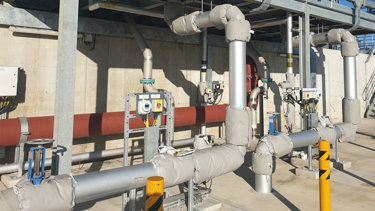
The business impact of better visibility
Industry surveys show more than 80% of UK industrial firms experience unplanned downtime, with machine failures alone accounting for roughly 3% of working days lost each year.
A more proactive approach to ageing asset management, together with a live understanding of asset health, can reduce unplanned downtime and bring measurable benefits:
- Early detection of faults
- Lower maintenance costs by targeting interventions where they matter most
- Improved compliance and safety backed by clear evidence of condition
- Stronger investment decisions informed by actual degradation rates
- Extended asset life through proactive management
A £49 billion UK maintenance backlog and £80 billion in annual downtime costs mean ageing assets now pose a direct threat to business performance. They heighten risk and steadily erode competitive advantage.
Organisations who invest in modern testing, inspection and monitoring practices gain a clear advantage: safer operations, reduced downtime, stronger cost control, and more resilient infrastructure.
More from our Knowledge Hub
 Insights
Designing compliance from day one: Why early-stage planning matters more than ever
 Insights
Turning monitoring data into confident, cost-effective asset decisions
 Insights
The maintenance deficit: What delayed testing and inspection really cost
 Insights
Ageing assets: The hidden risk undermining industrial performance
Environmental compliance today, creating a sustainable tomorrow
Helping you reduce risk to the environment and your operation by managing assets compliantly while achieving commercial, ESG, and net-zero goals.
Contact our experts