

Understanding the new flood reality and why traditional protection is no longer enough
Published: 17 March 2026
The UK’s flooding landscape is shifting quickly. What may once have felt like a series of isolated, weather driven incidents is now a persistent and structural challenge that organisations can no longer afford to approach with yesterday’s thinking.
Rainfall is becoming heavier, more frequent, and increasingly capable of overwhelming drainage systems that weren’t designed for today’s climate reality. Scientific evidence shows flooding across the UK is now more frequent, more widespread, and easier to trigger, driven by rising rainfall intensity and wetter autumn and winter seasons.

Flooding in January 2025 saw around 90mm of rain fall in 24 hours, triggering 137 flood warnings across England, Scotland and Wales. When Storm Claudia hit in November 2025, parts of England and Wales received a month’s worth of rain in just six days.
Additionally, 2025 data reveals sharper week-to-week changes, characterised by greater variability than any of the previous seven years, adding further stress to already saturated or drought stricken ground. The result is familiar to many site operators: water accumulating faster, surfaces becoming overwhelmed, and infrastructure struggling even during rainfall that doesn’t look particularly severe.
This is the new baseline for flood risk – and adapting to it is essential.
Understanding the new drivers of this shift in flood behaviour
The drivers of modern flood risk are no longer confined to storm severity. They are rooted in a wider climatic shift.
As global temperatures increase, the atmosphere holds more moisture. When that saturated air is lifted by passing weather systems, it cools and releases heavier, more intense rainfall. This means that any rain-producing system – not only the dramatic ones – now has the potential to overwhelm local infrastructure.
This helps explain what many are already seeing on the ground:
- Rivers are rising faster after rainfall that doesn’t appear extreme
- Surface water flooding is affecting locations with little historical flood association
- Prolonged dry periods followed by sudden downpours that exceed ground absorption capacity
The baseline has shifted, and industrial sites are being exposed in ways they simply weren’t a decade ago.
What this means for site operators
Organisations now face two interconnected challenges: climate volatility and operational complexity. This creates five core risk areas that should be planning priorities.
- Operational downtime: Flooding can stop production instantly, damaging equipment, halting logistics, and forcing safety shutdowns. Even moderate flooding can take days to recover from as teams assess and reinstate critical systems.
- Environmental liability: Floodwater can mobilise contaminants quickly. Sites storing fuels, chemicals, waste, or hazardous products face the heightened risk of contaminants being released into the environment, triggering investigations, mandatory clean-ups, and costly penalties.
- Asset damage: Electrical systems, machinery, stock and infrastructure are all increasingly vulnerable. Many drainage systems were built for a different era of rainfall and are now overwhelmed more often and more quickly.
- Regulatory and financial penalties: Regulators expect proactive mitigation. Flood-related pollution or non-compliance is no longer viewed as unavoidable, and the consequences for breaches can escalate rapidly.
- Reputational risk: Customers, partners and insurers expect resilience. A single incident can damage confidence, disrupt supply chains, and increase insurance premiums. Flooding should now be considered a business continuity issue that sits firmly on the strategic agenda, not a weather event.
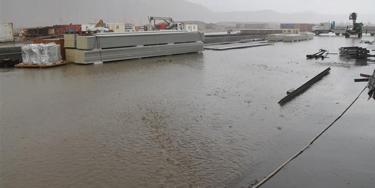
Why site-level protection is no longer enough
Many organisations still rely on site-specific measures: installing barriers, upgrading drains, or improving local pumping capacity. While these are still important, they no longer match the scale or nature of UK flood risk.
Rainfall behaviour is changing at a regional level, not just a site level. The extreme dry periods followed by sharp wet spells across England in 2025 showed that multiple sites can become vulnerable at the same time, stretching resources and exposing inconsistencies in localised planning.

A one-site, one-solution approach can leave gaps, inefficiencies and vulnerabilities.
Modern resilience requires a shift in mindset from isolated interventions, reactive measures, and protection based on historical patterns to organisation-wide flood resilience strategies, scenario-based planning linked to climate data, and standardised, integrated approaches across sites.
This evolution isn’t just best practice – it aligns with how insurers, regulators and supply chain partners now assess risk. It also helps ensure investment is targeted where it matters most and creates a consistent resilience framework across operations.
Building the next generation of flood resilience
To keep pace with today’s flood realities, organisations should consider developing a structured, strategic flood resilience programme that includes:
- Estate-wide climate and flood risk assessments
- Drainage and surface water capacity reviews
- Flood scenario modelling aligned with new rainfall patterns
- Critical asset vulnerability mapping
- Environmental protection plans linked to permit and compliance requirements
- Clear incident response, continuity and recovery plans
- Routine monitoring, testing and annual resilience reviews
This approach reflects the broader regulatory and environmental direction of travel: more scrutiny, higher expectations, and a stronger emphasis on proactive risk management.
The bottom line
Flooding is no longer sporadic or predictable. It is an evolving operational, environmental and regulatory threat shaped by a wetter, more volatile UK climate.
Organisations that move beyond traditional site-level protection and embed flood resilience into strategic planning across their estates will be best placed to protect their people, assets and reputation in this new era.
More from our Knowledge Hub
 Insights
What does a Regulation 61 notice mean for your airport operations?
 Insights
Turning environmental awareness into action: 8 defining conversations from ESS Expo 2026
 Insights
Environmental resilience will decide who wins the UK data centre race
 White paper
The Resilience Dividend: How Environmental Resilience is Becoming a Competitive Advantage for Data Centres
Environmental compliance today, creating a sustainable tomorrow
Helping you reduce risk to the environment and your operation by managing assets compliantly while achieving commercial, ESG, and net-zero goals.
Contact our experts