

Why flood readiness is a competitive advantage for your business
Published: 2 April 2026
Even with the best flood-resilient design, incidents can – and do – still happen. When they do, the speed and effectiveness of your response doesn’t just determine short-term disruption. It shapes operational continuity, environmental impact, regulatory exposure, insurance costs, stakeholder confidence, and even long-term brand reputation.
For site owners and operators, emergency readiness in the face of flooding has shifted from being a defensive measure to a strategic differentiator. This capability separates organisations that recover fast and safely from those who face escalating downtime, spiralling costs, and long-lasting damage.
Why emergency preparedness matters more than ever
Flood events are unpredictable, fast-moving, and increasingly severe. When water reaches your site, the clock starts ticking and every hour matters.
A well-prepared organisation can achieve several critical outcomes:
- Protect staff, customers and local communities
- Keep critical operations running or bring them back online more quickly
- Minimise environmental harm and regulatory exposure
- Reduce asset damage and long term repair costs
- Maintain stakeholder and insurer confidence
A poorly prepared organisation risks the opposite as the impacts of flooding cascade: days or weeks of outage, extensive environmental contamination, expensive recovery operations, and lasting operational and reputational consequences.
In a competitive landscape where customers demand reliability and regulators expect robust preparedness, the ability to respond quickly, safely and effectively has become a core business capability.
How downtime escalates during flood events
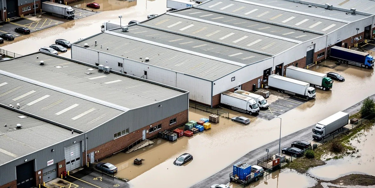
Floodwater may enter a site in minutes, but the impacts can compound for weeks if not addressed strategically. Operational downtime can escalate quickly for a number of reasons.
- Hidden contamination: Floodwater can carry oils, fuels, chemicals, silt, debris, sewage and pathogens. Once these contaminants spread across operational areas, surfaces, drains or soil, the response becomes far more complex. Without immediate containment, contamination can extend from a localised spill to a sitewide environmental incident.
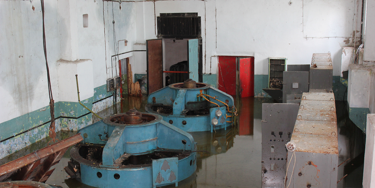
- Damage to critical infrastructure: Electrical systems, communications equipment, fuel lines, mechanical assets, and IT hardware are highly vulnerable to water ingress. Even minor exposure can cause catastrophic failure, requiring full replacement rather than repair.
- Supply chain and access disruption: Recovery may be slowed by closed roads, inaccessible delivery points or restricted access to key areas, prolonging outages even after the water recedes.
- Regulatory requirements: A flooding incident, if not dealt with swiftly and safely, can introduce a number of additional environmental reporting obligations, waste handling rules and contamination assessments, adding further time demands and complexity. A flood event that might have been resolved in hours can stretch into days or weeks if the right capabilities, partners and processes are not in place.
Reframing flood response: more than pumping water
While flood response is still primarily equated with pumping water, effective flood response in today’s operating environment is a strategic, multidisciplinary operation with four critical pillars.
1. Environmental protection
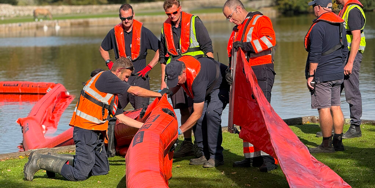
As well as stopping the floodwater, contaminants must also be prevented from escaping into the environment. This can involve bunding, boom deployment, temporary containment, interceptor checks, drain isolation, or controlled discharge.
2. Contamination control
Once water is present, assessing what’s in it is of the utmost importance. Hydrocarbon residues, chemicals, sewage, debris, and biological contaminants require specialist handling. Without immediate control, contamination can spread through soil, drainage networks, sumps, interceptors, and operational areas.
Strategic contamination control aims to:
- Limit the spread
- Capture and treat contaminated liquids
- Clean affected infrastructure
- Prevent secondary environmental incidents
3. Waste management
Flood recovery generates significant waste, including contaminated water and sediment, damaged materials, packaging, equipment, and even structural components.
Efficient waste management is often one of the largest and most overlooked cost drivers in a flood recovery operation. It requires segregation of contaminated materials, compliant transportation and disposal, and compliant tracking and documentation.
4. Asset recovery and restoration
Beyond the immediate emergency, assets must be repaired, restored or replaced. This can span a range of systems, equipment and infrastructure, including electrical, mechanical, IT and communications, and storage and production.
A strategic approach focuses on getting assets operational quickly while preventing long-term damage, corrosion or safety hazards.
Emergency readiness as a competitive advantage
Organisations that invest in emergency preparedness consistently outperform those that don’t – not just during crises, but in everyday operations.
They recover faster, maintain customer confidence, reduce insurance claims, lower environmental risk, and demonstrate operational resilience to stakeholders. In many sectors (such as energy, manufacturing, logistics, retail, and transport), resilience is increasingly seen as a mark of professionalism and reliability.
Building your readiness capability
Real preparedness goes beyond a written plan – it demands:
- A trained and practised incident response team
- Pre-positioned equipment and materials
- Clear command and communication protocols
- Specialist environmental and recovery partners on standby
- Familiarity with regulatory obligations
- Integration with business continuity, ESG, and risk frameworks
When these elements are in place, organisations go beyond just surviving flooding to coming back even stronger.
Respond fast, recover fully, and protect what matters
Flooding will continue to challenge UK organisations – even those with excellent resilience-by-design strategies. But what truly sets leaders apart is how they respond when the water arrives.
Emergency readiness – and the ability to recover quickly, safely and compliantly – is now a strategic differentiator. It protects people, assets, the environment, and the continuity of your operations.
More from our Knowledge Hub
 Insights
What does a Regulation 61 notice mean for your airport operations?
 Insights
Turning environmental awareness into action: 8 defining conversations from ESS Expo 2026
 Insights
Environmental resilience will decide who wins the UK data centre race
 White paper
The Resilience Dividend: How Environmental Resilience is Becoming a Competitive Advantage for Data Centres
Environmental compliance today, creating a sustainable tomorrow
Helping you reduce risk to the environment and your operation by managing assets compliantly while achieving commercial, ESG, and net-zero goals.
Contact our experts